

How Max Foundation Works with the Private Sector to Impact Child Health
At Max Foundation, our ambition is deliberately bigger than delivering successful projects. We exist to design, test and generate evidence around scalable solutions that improve child health and overall community health outcomes, and to step back once local systems are ready to carry those solutions forward.
For us, success is not measured by how long we remain involved. It is measured by whether local system actors adopt, adapt, and sustain the approaches themselves. Governments are essential to this vision, but they are not the only actors that matter. The private sector, and particularly micro, small and medium enterprises (MSMEs), plays an equally critical role.
Why the Private Sector Matters for Child Health
Water, sanitation, food, nutrition, hygiene and maternal care products and services are largely delivered by private actors who are operating close to communities: sanitation entrepreneurs, food producers, traders, sweepers, and other service providers.
Our work in Bangladesh has made this reality visible. Across regions, micro- and small entrepreneurs are already acting as frontline health solution providers, reducing disease burden and future healthcare costs through preventive services and products. Their contribution represents a significant, yet largely unrecognised, social return on investment (SROI) for society.
If we want scalable and sustainable health impact, enabling these entrepreneurs is not optional — it is fundamental.
However, these entrepreneurs are rarely treated as part of the health or economic system. Many remain informal, invisible to policy, too small for banks, and too fragmented for corporate supply chains.
Our Role: Enabling Markets, Not Replacing Them
Max Foundation does not aim to directly finance or run private businesses. Instead, we work at the market system level: understanding constraints, convening actors, and helping design solutions that allow entrepreneurs to thrive long after projects end.
In Bangladesh, this approach has taken shape through a structured, evidence-led private sector agenda driven by Max Foundation Bangladesh. This agenda rests on four pillars:
Making impact visible
Through regional and national dialogues, we have clarified the scale and value of what entrepreneurs already contribute to health and nutrition outcomes, framing them not as beneficiaries, but as economic actors generating public value.
Understanding real bottlenecks
These dialogues with entrepreneurs highlighted recurring constraints: limited access to finance (only around 20% access formal services), lack of data and documentation, weak market access, fragmented support services, and policy blind spots that exclude informal service providers.
Giving entrepreneurs a voice in their ecosystem
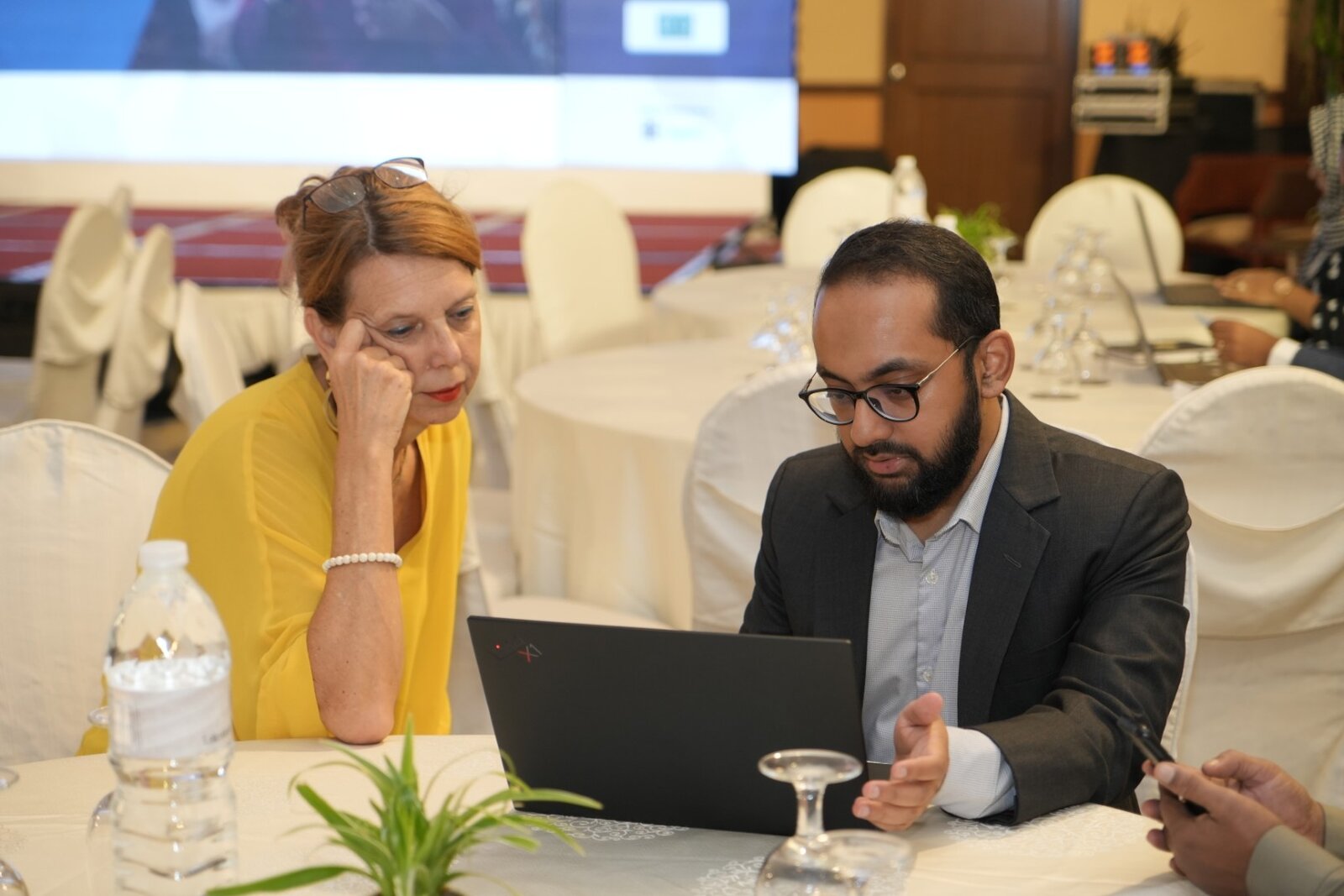
Rather than speaking for entrepreneurs, MFB created spaces where they could directly engage banks, corporates, government agencies, NGOs and media. The national workshop in September 2025 marked a turning point: entrepreneurs stood shoulder to shoulder with decision-makers, shaping the agenda rather than reacting to it.
Designing system solutions, not isolated fixes
The conclusion was clear: fragmented initiatives will not unlock scale. What is needed is an ecosystem accelerator that connects existing actors, fills gaps, generates usable data, and supports differentiated “graduation pathways”, from survival to stability to growth.
From Dialogue to Action: The Entrepreneurship Lab
One of the most concrete outcomes of the national workshop was the collective endorsement of the Entrepreneurship Lab, a new mechanism that MFB is designing to address exactly the system failures entrepreneurs identified.
The Lab is not another project. It is a neutral backbone organisation that will:
- ✓ Generate data and evidence to make informal entrepreneurs visible to banks, corporates and policymakers
- ✓ Make available technical & vocational training modules accessible
- ✓ Translate complex financial and government schemes into accessible pathways
- ✓ Pilot aggregation, finance and market-linkage models with private sector partners
- ✓ Monetise social return on investment to shift how preventive health entrepreneurs are valued
In short, the Lab operationalises Max Foundation’s evolving role: from implementer to system catalyst, from service delivery to enabling sustainable market-led impact.
What This Means for Partners
For partners who recognise that development challenges are increasingly systemic, this shift matters. Working with Max Foundation means investing in scalable pathways, not stand-alone pilots. It means leveraging the private sector not as a co-creator of inclusive solutions. And it means building evidence that health, economic resilience and entrepreneurship are deeply interconnected, especially for children and future generations.
Our experience in Bangladesh shows what becomes possible when entrepreneurs are seen, heard, and enabled.
Why Enabling Local Markets Is Also a Trade & Aid Imperative
This reality also speaks directly to the evolving trade & aid agenda embraced by many donors and development partners.
Foreign companies, global brands and regional suppliers can only succeed in delivering inclusive trade outcomes when local market systems and supply chains are functioning. Without capable last-mile distributors, service providers, aggregators and entrepreneurs, even the best-designed products remain inaccessible to low-income consumers.
We have seen in many countries that (inter)national companies are willing to expand distribution, innovate products and invest in rural markets, but only where local entrepreneurship, aggregation and support systems reduce risk and transaction costs. In this sense, strong local MSMEs are not competitors to foreign companies; they are their essential partners.
Aid that strengthens these market foundations therefore does double duty: it improves health and resilience today, while enabling more sustainable, inclusive trade relationships tomorrow.
Marjolijn Wilmink
Co-Director, Max Foundation
Related Stories
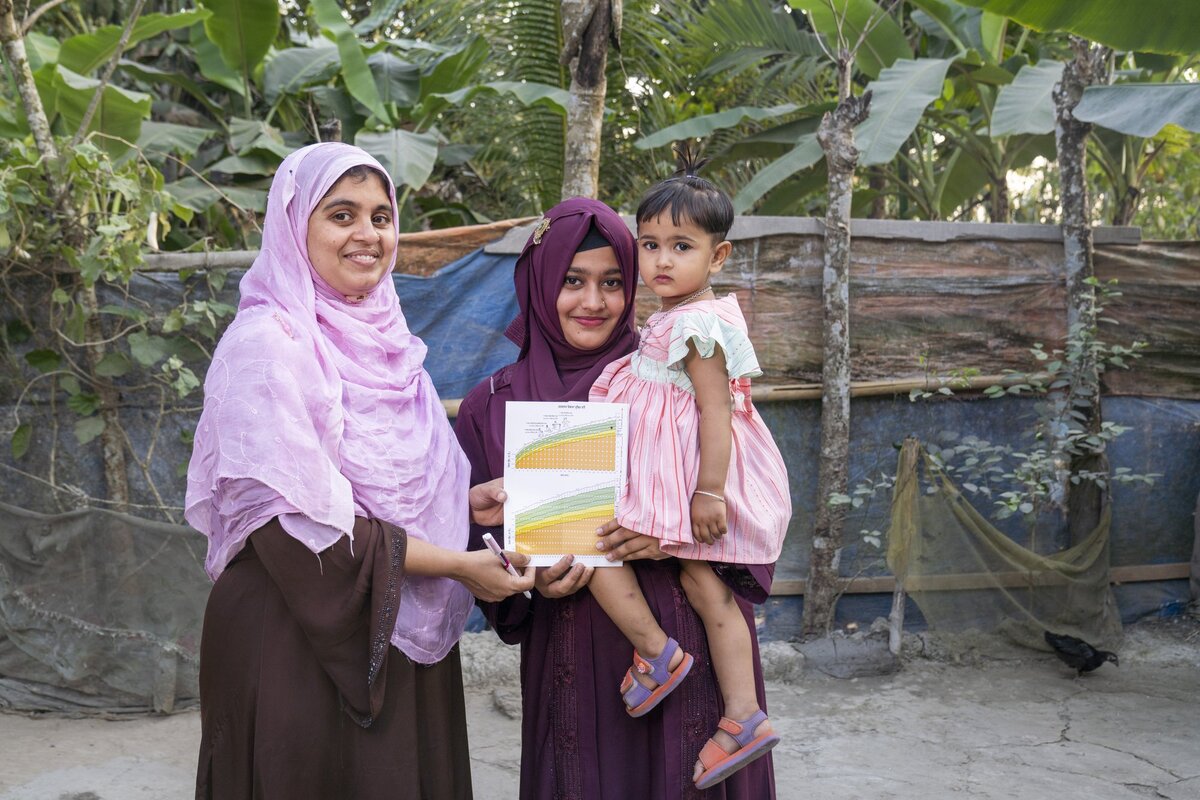
Community Women Entrepreneurs in Urban Bangladesh: What Continues After the Programme Ends
A qualitative study by BRAC James P Grant School of Public Health and Max Foundation looked at the work of entrepreneurs at active sites of the Healthy Village Urban programme in northern Bangladesh, and at areas the programme had already left. The findings were presented at ICOPH 2026 in Bali, Indonesia.
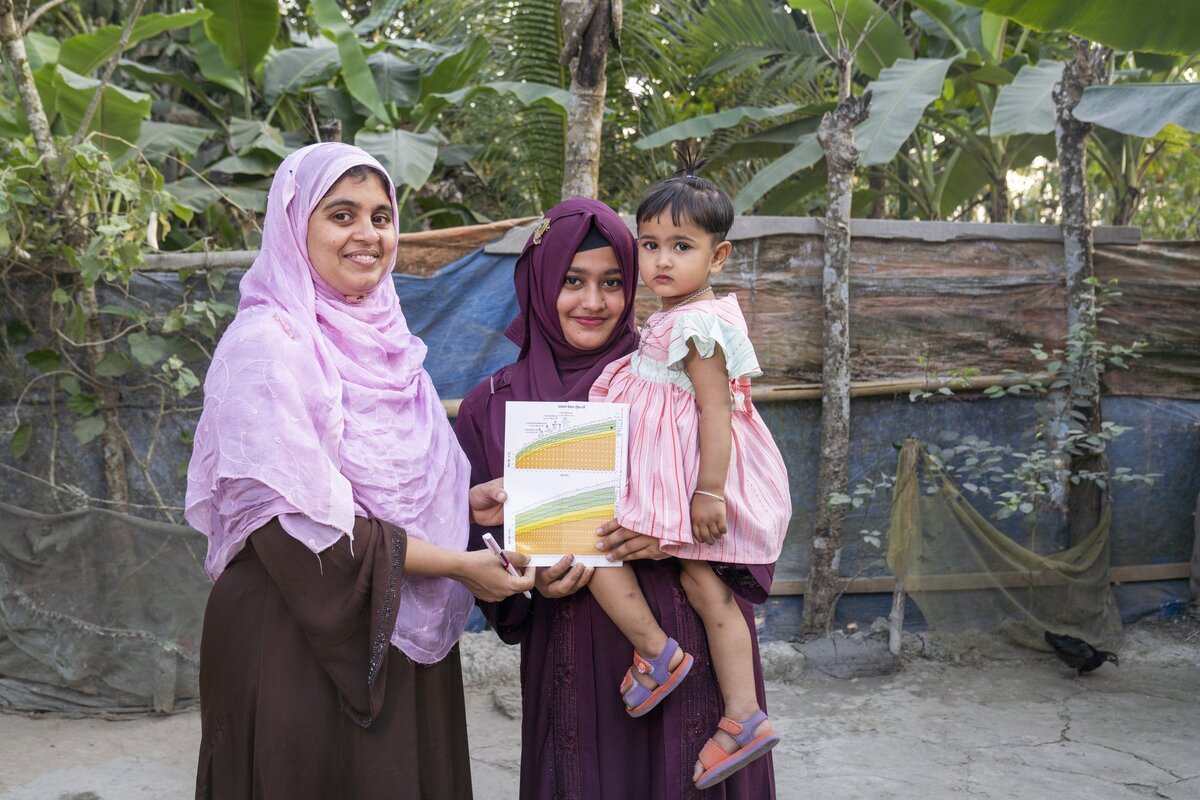
Institutionalising Innovations: Harnessing Public-Private Partnerships for Community-Based Nutrition Service Delivery
Max Foundation is working with the Institute of Public Health Nutrition (IPHN) to develop dedicated Community Nutrition Service Guidelines that anchor its market-based, entrepreneur-led delivery model in national standards.

Transforming Lives Through Safe Water: How MSE Is Powering a Rural Bangladeshi Dream
Access to safe and affordable water is not just a basic necessity, it is the foundation of health, dignity, and opportunity. In Bangladesh's rural and coastal regions, Max Social Enterprise (MSE) is working to turn hardship into hope.